top of page
.png)
Timeline of a Nation
Public Media 250

1700s—The Revolutionary Era

Mission Dolores 250 | Connect the Bay
Andrew Galvan is the curator of Mission Dolores in San Francisco, and as an Ohlone Indian himself has been working for decades to raise awareness of the integral role of native Californians in the development of the mission system. “Come to California, and you’ve got Indians all over the place today!” he says. “Indians whose ancestors were here 250 years ago!”

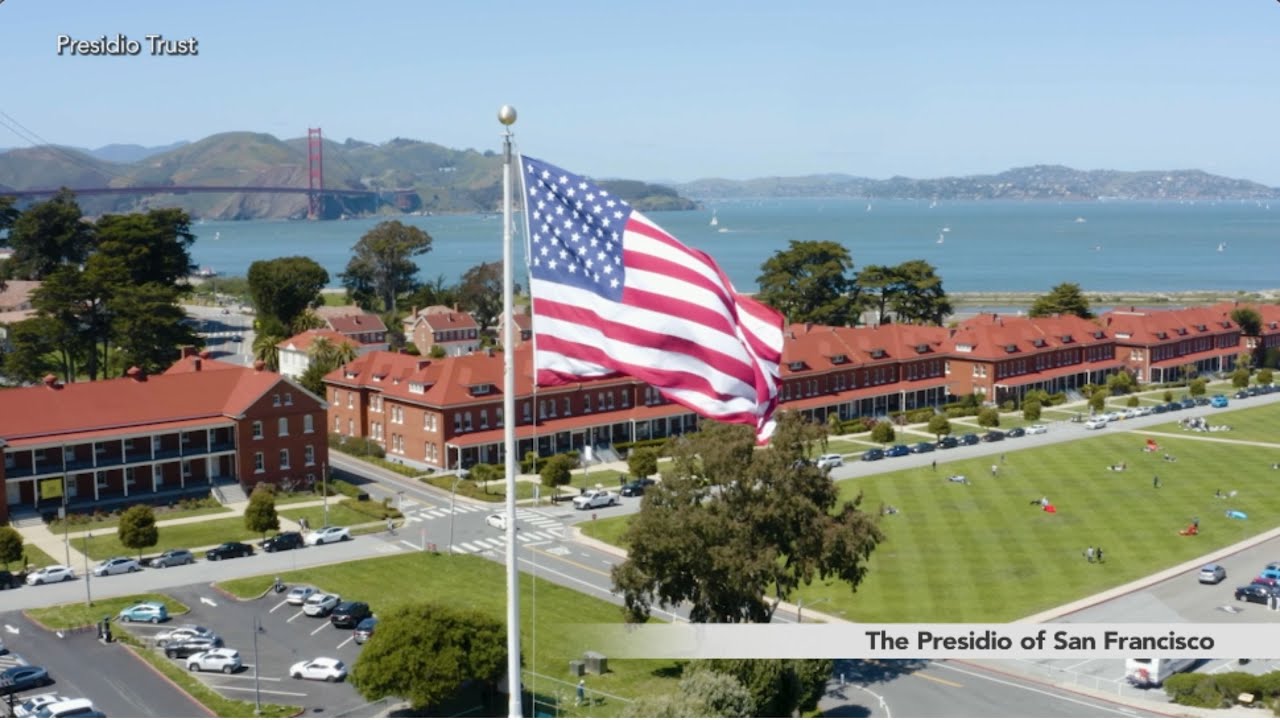
San Francisco Presidio | Connect the Bay
Older than you think! The founding of the San Francisco Presidio in summer of 1776 – and of the City itself – took place within weeks of the signing of the Declaration of Independence in Philadelphia, July 4, 1776. The folks at the Presidio Archaeology Lab have been working to uncover, preserve and educate the public about the important and fascinating history of this military fort that has operated under the three flags of Spain, Mexico and the United States for 250 years.


Thomas Paine's To Begin the World Over Again
Triumphs and tragedies of Thomas Paine’s life unfold in To Begin the World Over Again, a one-man play filmed live in Hollywood. Paine, provocative writer and flawed politician, ignited revolutions yet died ignored. His radical ideas on democracy, equality, and morality still challenge us: “We have it in our power to begin the world over again.”


America 250 Moments
An original Alabama Public Television production of 75, one-minute American legacy moments commemorating the semiquincentennial in July 2026.

1800s—Expansion, Division & Reconstruction


Meet Mary Pleasant
Meet Mary Pleasant is the daring saga of a 19th-century African-American woman, born a slave and raised in Nantucket, who became an international abolitionist, a prosperous entrepreneur, and a civil-rights activist whose work helped alter modern-day civil-rights law.


Franco-Americans: We Remember
They came to New England for the promise of a better life. They brought with them a commitment to their faith, their family and their community. They were at the heart of New England industry. Their beautiful churches grace the cities and mill towns where they worked, and their rich cultural traditions are bright strands woven into the fabric of New England life.



Unforgotten: Connecticut's Hidden Slave History
Slavery has deep roots in Connecticut and across New England. Enslaved people helped build the foundation of much of this state. Get to know some of these men, women and children and the lives they lived. Hear from descendants who reflect on their loved ones. And learn from historians, experts and volunteers going on a journey of discovery to uncover this hidden history.


It Started Here: Early Arkansas and The Louisiana Purchase
It Started Here: Early Arkansas and The Louisiana Purchase, chronicles the people and land of Arkansas, between the signing of the Louisiana Purchase in 1803, leading up to Arkansas statehood in 1836.

Early 1900s—Progress & Protest


Our American Family: The Barrerases
OUR AMERICAN FAMILY: THE BARRERAS From the darkness of a coal mine in New Mexico to vibrant beauty under the California sun, Our American Family: The Barreras Family provides a compelling narrative of unwavering commitment to family. Life in the remote company-owned town of Madrid in the 1920s was a mixture of hard, dangerous work offset by the joy of baseball and celebrations. With the closing of the mine in the early '40s, the extended family re-established itself in southe


Our American Family: The Youngs
OUR AMERICAN FAMILY – THE YOUNGS captures the voices of the generation that experienced this simpler time and the change that followed. The film profiles Darwyn Young, his wife Pauline and their eight children who labored as tenant farmers while nurturing a dream of one day owning their own land. The documentary chronicles their family journey, where reliance upon one another and their faith were the glue that held the family together through the extreme hardships of the Depr


Stately Images: The Public Art of Missouri's State Capitol
In 1911 Missourians approved funding for the current capitol building and a design that would showcase cultural and state history. Available construction monies resulted in a one-of-a-kind and breathtaking collection of stained glass, murals, carvings and statuary that evocatively portrays Missouri’s legendary and beloved history.



The Stavig Letters
A documentary based on the stories of Lars Stavig, who immigrated to the U.S. in 1876, and his brother Knut, who stayed behind in Norway. The two exchanged more than 150 letters spanning more than five decades from 1881 to 1938, the Stavig Letters give voice and reality to the immigrant experience from the perspectives of both countries.

1930s-1940s—Crisis, War & Resilience


The Pack Horse Librarians of Appalachia
This documentary tells the story of pack horse librarians – women hired by Franklin Roosevelt's Works Progress Administration (WPA) during the Great Depression to travel on horseback to deliver library books and magazines to people in Eastern Kentucky, braving creeks, mountains and inclement weather along the way. This program was funded in part by a grant from the Carolyn Tassie Memorial Fund.


Our American Family: The Clarks
For generations, the Clark family of Frankford, DE has shown tremendous support of one another as members faced hard times with tender loyalty. Our American Family: The Clarks traces the lives of this African-American family with seven children as they employed humor, resourcefulness and respect for all through the Depression, WWII, and racial tension.
Our American Family: The Barrerases
OUR AMERICAN FAMILY: THE BARRERAS From the darkness of a coal mine in New Mexico to vibrant beauty under the California sun, Our American Family: The Barreras Family provides a compelling narrative of unwavering commitment to family. Life in the remote company-owned town of Madrid in the 1920s was a mixture of hard, dangerous work offset by the joy of baseball and celebrations. With the closing of the mine in the early '40s, the extended family re-established itself in southe


Our American Family: The Smiths
OUR AMERICAN FAMILY: THE SMITHS profiles Willie and Rena Smith of Goldthwaite, Texas and their seven children. The film tells the story of a family whose patriarch dies at an early age leaving the mother to raise seven children ages 18 months to 14 years old. After trying for years to make a living on a small farm in Goldthwaite, Rena Smith sets her sights on Abilene. There she believes a better life awaits her children through greater educational and vocational opportunities
1950s-1970s—Civil Rights & Social Change


1955: Seven Days of Fall
1955, Seven Days of Fall is about the 1955 Brooklyn Dodger/New York Yankee World Series, based upon the poem entitled "1955" by James T. Crawford and produced and directed by Rory Fielding. In unprecedented style, the program uniquely blends the traditional documentary elements of archival film footage, still images, narration, period music and player and fan interviews with a recital of the poem to recount this timeless story seven decades later.


Storm of the Century: The Blizzard of '49
This one-hour documentary tells the story of the worst series of storms in Wyoming’s history. But for all the tragedy and loss, suffering and death, there was also hope and heroism, unselfish sacrifice and generosity. The blizzard brought out the best in people. Wyoming citizens from all walks of life worked together and demonstrated exceptional ingenuity in the face of dire circumstances.


A Commitment to Peace
In nanoseconds, the bombing of Hiroshima and Nagasaki at the end of W.W.II forever changed the nature of warfare and how nations would relate to each other. War reached its zenith. A Commitment To Peace looks closely at how the following Cold War years were complicated by personalities, ideologies, old fears and new visions. Unlocking the secrets of the universe would be relatively easy compared to finding the formula for peace. A Commitment To Peace is illustrated with remar



Founded on Friendship and Freedom
Tells the story of how two historians, Dr. Gordon “ Nick” Mueller and Dr. Stephen Ambrose, sought to salute the spirit of Americans who fought to preserve our freedom. Their dream exists today at The National WWII Museum in downtown New Orleans.

1980s-1990s—Culture, Technology & Power


Boom and Bust: America’s Journey on the Erie Canal
American industrial workers in steel, grain, textiles, and shipping tell their stories of labor and life along the Erie Canal. These are the men and women who built American economic prosperity on the Canal for 150 years, and bore the brunt of its decline in the final decades of the 20th century.


Hey Cartooners!
For nearly three decades Jule Huffman entertained the tri-state area as Mr. Cartoon, but his legacy loomed larger than his television personality. Now those who knew him best tell his story. From his childhood during the great depression, through World War Two, into the dawn of the television age and past the turn of the century. This is the story of Jule Huffman. As told by those who knew him.



A Murder in Montrose: The Paul Broussard Legacy
Twenty five years ago, Paul Broussard, a 27 year old gay man, was murdered on the streets of Houston, sparking a deafening outcry. The crime served as a wake-up call that highlighted all of the harassment and mistreatment experienced by the LGBTQ community. Through the documentary and a follow up live town hall, Houston Public Media explores the aftermath of this pivotal event – from civil unrest to hate crime legislation; from victim’s rights to political activism, Houston a


The Murder of Mulugeta Seraw
This story takes a deep archival dive into the rise of white nationalism in Portland, Oregon, which led to the murder of Ethiopian immigrant Mulugeta Seraw in 1988 at the hands of racist skinheads. The story is grounded in the personal account of Mulugeta’s uncle Engedaw Berhanu, who led the charge to hold the racist organization White Aryan Resistance responsible for his nephew’s murder. The film draws on oral histories of antiracist activists and people from Portland’s musi

2000s to Today—A Nation in Reflection


Juneteenth Jamboree: From a Free Place to Displace
With the Galveston landing of U.S. Army Gen. Gordon Granger in 1865, slavery in Texas ended. African bondsmen became freedmen, and women and children likewise became African Americans. Many left the plantations to join freedom colonies; others sought out opportunities in cities and towns. Today, the consequences of gentrification and rising property values challenge new generations.

Mission Dolores 250 | Connect the Bay
Andrew Galvan is the curator of Mission Dolores in San Francisco, and as an Ohlone Indian himself has been working for decades to raise awareness of the integral role of native Californians in the development of the mission system. “Come to California, and you’ve got Indians all over the place today!” he says. “Indians whose ancestors were here 250 years ago!”
San Francisco Presidio | Connect the Bay
Older than you think! The founding of the San Francisco Presidio in summer of 1776 – and of the City itself – took place within weeks of the signing of the Declaration of Independence in Philadelphia, July 4, 1776. The folks at the Presidio Archaeology Lab have been working to uncover, preserve and educate the public about the important and fascinating history of this military fort that has operated under the three flags of Spain, Mexico and the United States for 250 years.


Dick Cheney: A Heartbeat Away
The story of Dick Cheney, the man historians have dubbed the most powerful vice president in U.S. history. Hear his story recounted in his own words, from his modest upbringing in Casper, to his lifelong high-risk heart problems, his assessment of the world leaders he dealt with, the attack on Sept. 11, 2001.
bottom of page